Photo Repair Near Me: What to Know Before You Trust Anyone With Your Family's Memories
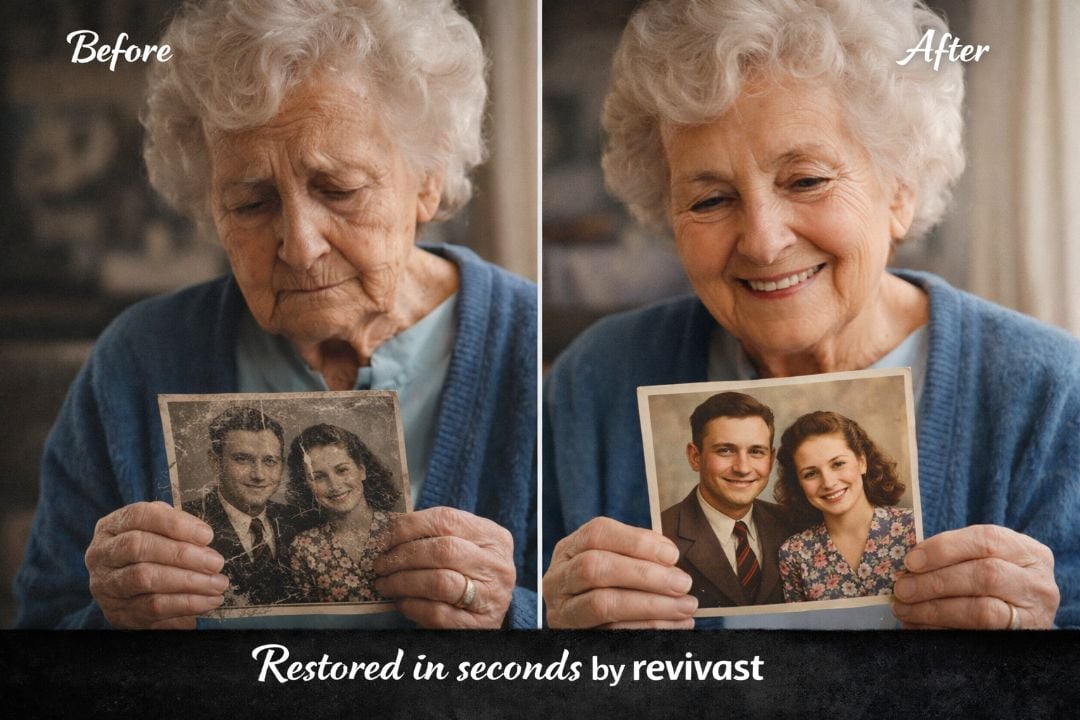
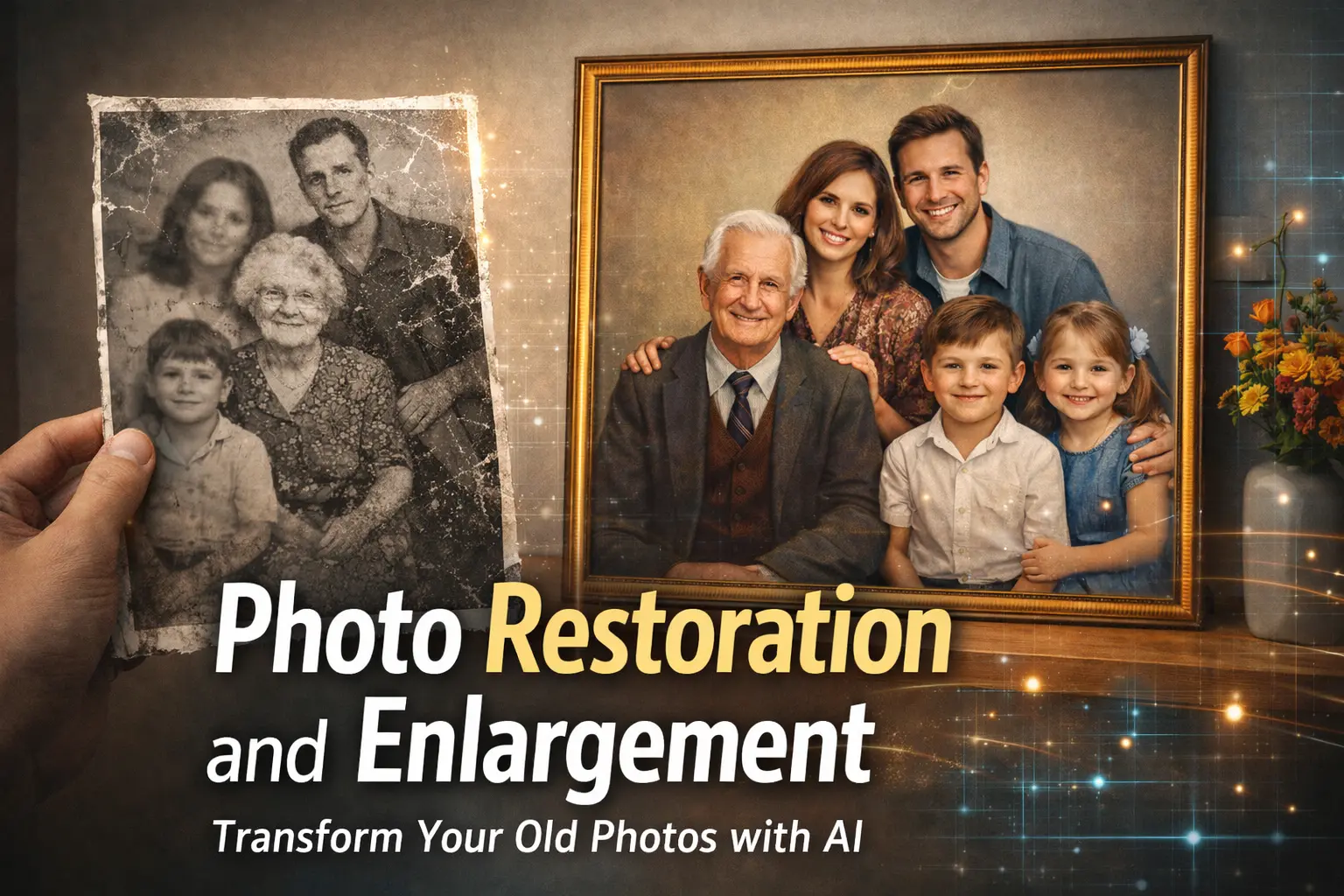
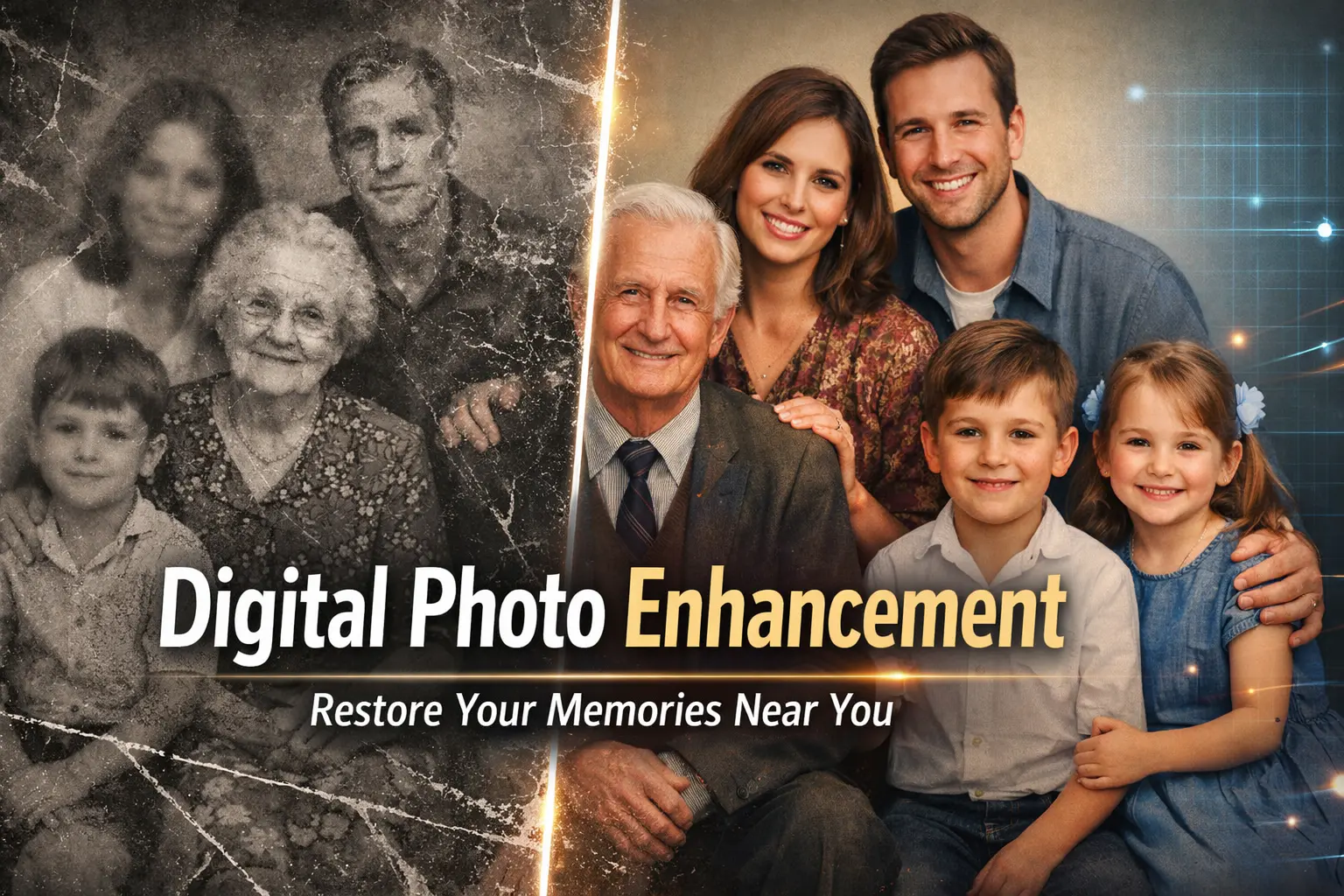
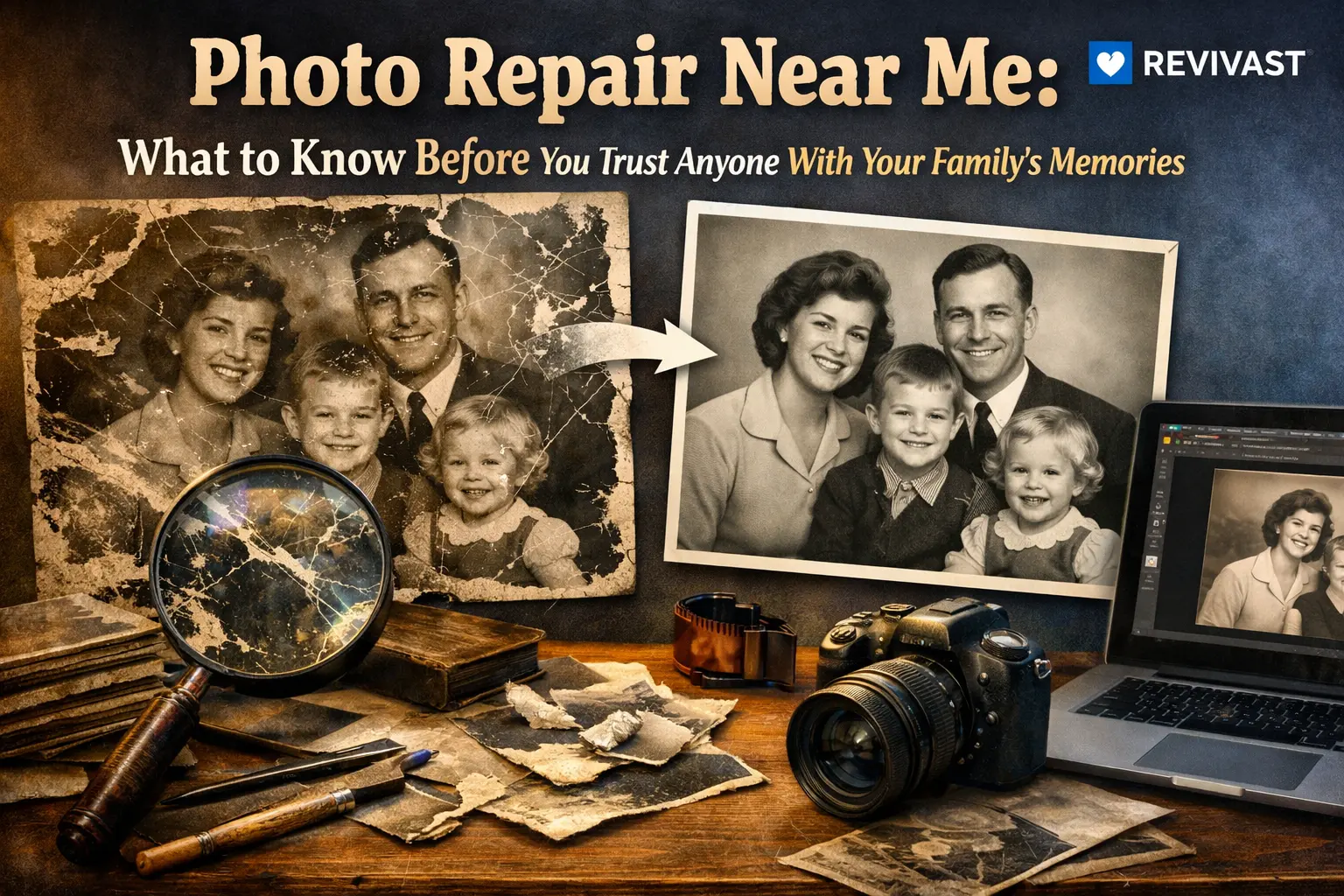
[IMAGE: A split-image showing a severely torn, faded 1940s family portrait on the left and a fully restored, crisp version on the right]Some photos are irreplaceable. A grandparent's wedding portrait. A childhood snapshot from the 1950s. A family gathering that will never happen again. When those photos start to fade, crack, or fall apart, the instinct is to find someone — anyone — who can fix them.
Searching for photo repair near me usually pulls up a mix of local print shops, framing stores, and photography studios. Some do excellent work. Others treat restoration as a side service, with inconsistent results and long turnaround times.
This guide walks you through what professional photo restoration actually involves, what separates good work from bad, and how to make a smart decision — whether you go local or online.
What Does Photo Repair Actually Involve?
Photo restoration is the process of repairing physical or digital damage to a photograph. That damage can take many forms:
- Tears and creases — often from improper storage or handling over decades
- Fading — caused by light exposure, humidity, or simply age
- Mold and water stains — common in photos stored in attics, basements, or flooded homes
- Color shifting — old prints often develop a yellow or brown cast over time
- Scratches and dust marks — surface damage from years of handling
Traditional restoration involved a skilled artist retouching a physical print by hand. Today, most professional services work digitally — scanning the original, then using software (often enhanced by AI) to repair damage pixel by pixel. The best results come when skilled human judgment guides that process.
Local Shop vs. Online Restoration Service: What's the Difference?
Local options can be convenient. You hand over the photo in person, which feels safer. But there are real trade-offs worth understanding.
Local print shops and framing stores
Many offer basic scanning and touch-up services. The quality varies widely depending on whether they have a dedicated restoration specialist or are just running automated filters. Turnaround times are typically measured in days or weeks. Pricing is often unclear upfront.
Professional online restoration services
Specialist services focus exclusively on photo repair. They invest in better tools, refined workflows, and trained reviewers. Turnaround can be significantly faster. You upload a scan of your photo from home, review the result, and receive a high-resolution file — or even a printed, framed piece delivered to your door.
Industry estimates suggest the global photo restoration market has grown substantially as more families digitize old collections — driven in part by an aging population wanting to preserve memories before they're lost entirely.
What to Look for in a Photo Repair Service
[IMAGE: Close-up of a water-damaged, mold-stained vintage photo being uploaded to a restoration service on a laptop screen]Not all restoration work is equal. Here's what separates reliable services from unreliable ones.
1. Before-and-after examples
Any credible service should show real examples of their work — not generic stock images. Look for cases similar to yours: torn portraits, mold damage, severe fading. If the examples are vague or polished to the point of looking fake, that's a red flag.
2. Human review, not just automation
AI tools have improved dramatically, but automated restoration alone often misses fine details — facial features, background textures, fine print on clothing. The best services combine AI speed with human quality control. Ask whether a trained person reviews the output before it's delivered.
3. Transparent pricing
Restoration pricing should be clear before you commit. Vague quotes like "prices vary by damage level" without any baseline are a sign you may be overcharged once they have your photo.
4. Data privacy and original file handling
You're uploading images of real people — often family members who never consented to have their likeness stored online. A responsible service encrypts your files and gives you control over how long they're kept. Some services offer automatic deletion after a set period, which is worth looking for.
5. Print and framing options
If you want a physical result — not just a digital file — check whether the service offers high-quality printing. A restored photo printed at low resolution loses much of the value of the restoration work. Look for HD output suitable for framing and display.
Common Mistakes People Make When Searching for Photo Repair
Sending the original without keeping a backup
Before mailing or handing over any original photo, scan it yourself — even a basic smartphone scan is better than nothing. Originals can be lost, damaged further, or simply mishandled. Never send your only copy anywhere.
Choosing based on price alone
Cheap restoration often means automated filters with no human review. The result might look clean at a glance but show unnatural smoothing, blurred faces, or incorrect color. For a photo that matters, price should not be the primary decision.
Not specifying what you want
Good services ask what outcome you're looking for. Do you want it colorized? Printed? Enhanced for a specific frame size? If a service doesn't ask these questions — or doesn't give you the option — they're likely running a one-size-fits-all process.
Expecting perfection from severely damaged photos
Some damage — particularly missing portions of the image, severe mold deterioration, or extreme fading — may limit what's possible. Honest services tell you this upfront. Be wary of anyone who promises a flawless result on a heavily damaged original without caveats.
A Real Example: Restoring a 1940s Family Portrait
Consider a family who discovered their grandmother's 1943 wedding portrait in a water-damaged box. The photo had a large tear across the center, mold spotting on one corner, and had faded to a soft grey. Rather than searching endlessly for photo repair near me, they uploaded a scan to Revivast — a restoration service that pairs AI technology with expert human review.
The result came back in under two minutes: tears seamlessly repaired, mold spots removed, and the portrait restored to a clarity the family had never seen. They chose to have it colorized and ordered it in a premium wood frame as a gift for their grandmother's 95th birthday. She cried when she saw it.
Services like Revivast solve the core problem with local options — inconsistency and inconvenience — by making professional-grade restoration accessible from home, with no account required and results in 30 to 90 seconds.
When Online Is Actually the Better Choice
For most people searching for photo repair near me, the underlying need isn't geographic. It's trust, speed, and quality. You want someone who knows what they're doing and will handle your photo carefully.
Online restoration services have made it easier — and often safer — to get high-quality results without leaving home. This matters especially for older family members who may not have easy access to a specialist store but still want their memories preserved.
Revivast was built with exactly that user in mind. The interface requires no account, no technical knowledge, and no lengthy back-and-forth. Upload your photo, receive your restored image, and choose whether you want a digital file or a physical print delivered in a premium frame. The service also uses encrypted storage with optional auto-deletion after 30 days — so your family's images stay private.
According to a survey by Legacybox, over 50% of people say they have damaged or deteriorating family photos they haven't yet done anything about. The barrier isn't usually the desire to restore them — it's not knowing where to start or not trusting the process.
[IMAGE: A beautifully framed restored family portrait hanging on a living room wall, warm lighting, modern home setting]Frequently Asked Questions
How much does photo repair cost?
Pricing varies significantly. Local shops may charge anywhere from $20 to $150+ depending on damage severity. Online services often have flat-rate or tiered pricing that's more predictable. Always check what's included — digital file only, or print options too.
Can any photo be restored, no matter how damaged?
Most photos can be meaningfully improved. Severe cases — large missing sections, extreme mold damage, or photos that have physically disintegrated — may have limitations. A reputable service will assess this honestly before charging you.
Is it safe to upload old family photos online?
With a reputable service, yes. Look for encrypted file transfer, clear privacy policies, and options to have your files deleted after delivery. Avoid any service that stores your images indefinitely without your consent or uses them for marketing purposes.
How long does photo restoration take?
It depends on the service. Local shops often take several days to weeks. AI-assisted services can deliver results in minutes. If you need a physical print, factor in shipping time on top of the restoration itself.
Can black-and-white photos be colorized as part of the restoration?
Yes. Many services offer colorization as an add-on or included feature. Good colorization goes beyond automation — it uses contextual clues in the image (skin tones, era-appropriate clothing colors, environmental details) to produce something that looks natural, not painted. Natural photo colorization for black-and-white or sepia photos can transform how a family sees an old image entirely.
What file format should I use when uploading?
JPEG is accepted by most services. For best results, scan at the highest resolution your scanner allows — 600 DPI minimum, ideally 1200 DPI for small or heavily damaged originals. A higher-resolution input gives the restoration process more detail to work with.
Ready to Restore a Photo That Matters?
Finding photo repair near me doesn't have to mean settling for whatever's closest. The right service — whether local or online — is one that handles your photo with care, delivers consistent quality, and gives you control over the outcome.
If you have a damaged, faded, or torn photo sitting in a drawer right now, don't wait. The longer deterioration continues, the harder restoration becomes.
Restore your photo now — no account needed, results in under 90 seconds, with the option to receive it framed and ready to hang.